Nature Notes July 2025
Nature Notes
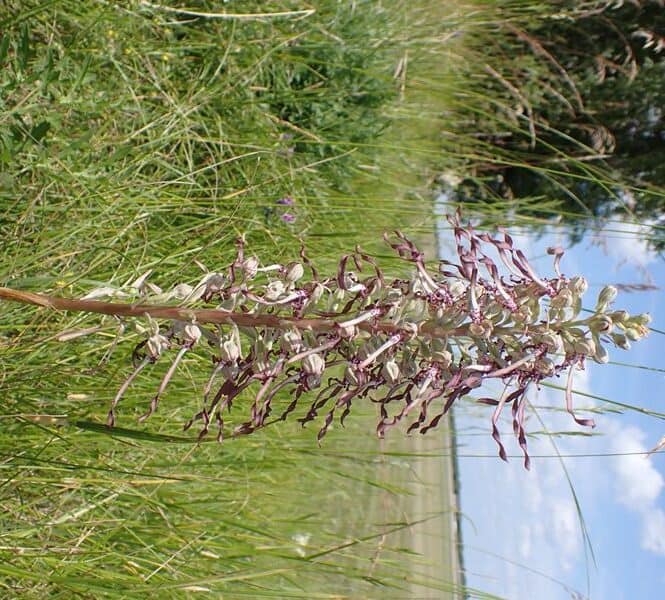
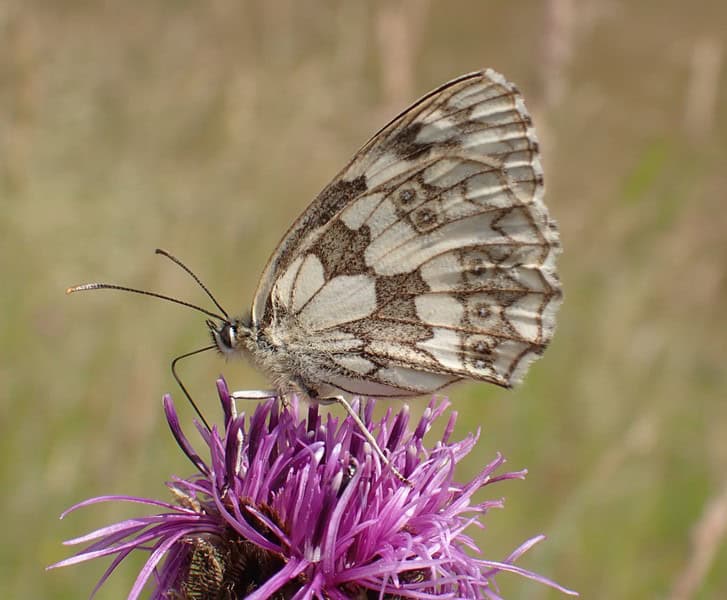
It was already hot as we climbed the steps to the southern end of the Devil’s Dyke near Newmarket in mid-June. This is an ancient earthwork which runs for several miles near the race course and is a refuge for wildlife dependent on chalk grassland. We were bowled over by the abundance of flowers and butterflies: there was bright red Bloody Cranesbill; white Hedge Bedstraw; yellow Rock Rose and magenta Greater Knapweed, to name but a few. Around and over them all danced and jinked a swarm of delicately marked Marbled White butterflies, looking like small Swallowtails in flight but almost disappearing as they alighted on a flower head and closed their wings, due to the cryptic colouring of the underwing. We noticed that only one per flower head was the norm, as the approach of another, resulted in the resident butterfly snapping its wings open to drive away the intruder. Later, we saw a female disappear into a thick tussock of grass, where she became completely invisible, presumably to lay her eggs. Among the throng of Marbled Whites there were also, Skippers, Meadow Browns, Ringlets and a few beautifully chequered, orange and black, Dark Green Fritillaries. We walked on, crossing the road by the entrance to the race course, and beyond towards the distant A11. A Curlew sang from a far hillside and a pair of Grey Partridges took off from the bottom of the dyke, quickly gliding away out of sight. Further on there were different flowers: pink Pyramidal Orchids, Yellow-wort and most amazingly, Lizard Orchids. The latter are named for the shape of the flowers which do indeed resemble small lizards, they also have the characteristic smell of billy goat! That evening, we walked from our campsite, alongside wide conservation headlands, past the knurled old Oak tree hissing with young Barn Owls waiting to be fed and on to a nearby area of partially felled woodland, adjacent to the King’s Forest. As darkness fell and the Tawny Owls began to hoot, we heard the first distinctive reeling song of a Nightjar, then a ‘gweek’ call as it left its song perch, before starting to sing again from another tree on the other side of the clearing. This was repeated several times, and once, we were fortunate to see one fly right overhead, its wings held in a tight V as it swerved and drifted after moths and other flying insects.
Do let me know if you see any interesting wildlife (rachel.42rr@btinternet.com)