Nature Notes August 2025
Nature Notes
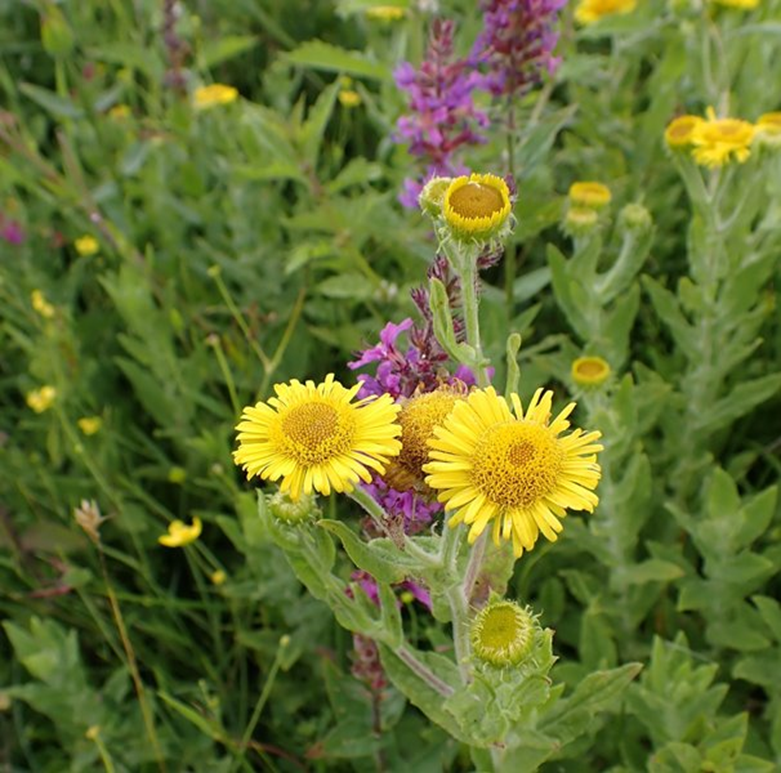
Swannington Upgate Common is a rare, wild corner of Norfolk, where it is possible to walk alongside a stream that ripples and chuckles its way through woodland. At this time of year, the path beneath the trees is in deep shade with only the occasional pinpricks of the dainty white flowers of Enchanter’s Nightshade lighting up the gloom. There is always the anticipation that there might be something unusual around the next corner, but on our July visit, it was just a friendly dog walker. We walked on to the open area beyond the trees and down into the wet fen which was alight with swathes of magenta Purple Loosestrife and buttercup yellow Common Fleabane. Orange Gatekeeper butterflies were busy round the clumps of Bramble on the higher ground, while in the damper regions, the more muted Meadow Browns and dusky Ringlets were to be found and occasionally a bright Red Admiral. On a visit earlier in the year, the low lying ground had been extremely wet, but it had now dried out and become covered with lush vegetation. There were huge patches of the five-lobed Marsh Cinquefoil leaves and in the wettest part we spotted the bronze foliage of Marsh Speedwell. Some areas were thick with Water Mint which gave off a wonderful minty aroma as we pushed our way through it. Amongst the dense ‘jungle’, grasshoppers and bush crickets chirped and sprang from leaf to leaf, some inadvertently leaping into the strengthened webs of female Wasp Spiders. We found one web which appeared unoccupied but with the next meal ready cocooned and hanging from the central threads, until we accidently moved the surrounding leaves. This caused the owner of the web to rush up from her lair in the vegetation below and into the centre of the web, expecting the vibrations to bring her another victim in need of rapid wrapping in silk.
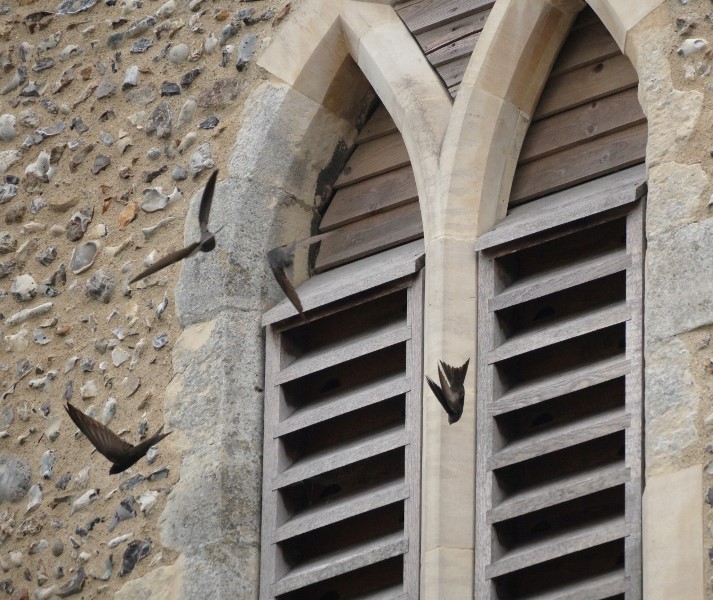
Amazingly, Mark was able to take a couple of photos of ‘our’ Swifts fledging from St Mary’s tower! A couple of days later all the Reepham Swifts left on the wings of a thunderstorm. This is something they often do, but the extremely early date of 21st July for their departure, is an indication of the lack of aerial insects on which they rely for food. When we moved to Reepham in the 1970s, the Swifts would leave during the first week in September, as there was enough aerial plankton for the airborne young to grow strong before they had to migrate to Africa, now they have to go immediately.