
Nature Notes October 2022
Nature Notes October 2022
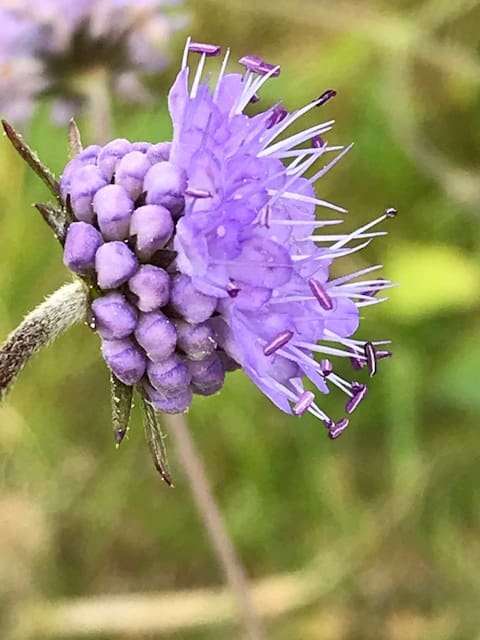
The fen at Buxton Heath in September was a sea of mauve heads of Devil’s Bit Scabious, swaying on long slender stalks. Amongst the low vegetation were bright yellow, buttercup-like flowers of Lesser Spearwort and pink hooded florets of Marsh Lousewort. This area had not been too badly affected by the summer drought due to springs of water which rise at the west end of the valley, but the heath to the north had been scorched by the extreme heat and much of the Heather had died, leaving swathes of brown foliage on dead woody stalks. This will reduce the emergence of Silver-studded Blue butterflies next year, since the caterpillars feed on tender Heather leaves. Bumblebees will also have suffered, as their plentiful source of nectar in the Heather flowers was not available. It had been a very good year for other insects however, as the presence of a family of Stonechats testified. Stonechats feed on all sorts of insect prey and had a very good supply of grasshoppers with which to feed their young.
 In early October there was still plenty of colour amongst the grasses, where plants were having a late flowering and a few fungi were sending up their fruiting bodies. Big red Fly Agarics were lurking in Bracken under the Birch trees but there were a few less obvious species too. Turning over a small orange capped specimen I was astounded to see that instead of gills, it had spines beneath the cap: a Hedgehog Fungus! This was a very exciting find as it was the first ‘Hedgehog’ I had seen in Norfolk. There was a line of them growing in the wet Birch wood where we had often looked in the past, so presumably this summer’s weather conditions stimulated them to send up their toadstools for the first time in many years. It can be as long as thirty years from one fruiting to the next in some species, as they also spread by underground hyphae, very thin strands which can cover a vast area beneath the surface of woodland, latching on to tree roots to the benefit of both fungus and tree. Other fungi have mutually beneficial relationships with grass and other low plants and so can live in open areas away from trees, and still others form even closer relationships with algae to produce lichens: the fungus provides the structure and the algae the food, by photosynthesis – how amazing it that!
Do let me know of any interesting wildlife you see rachel.42rr@btinternet.com